
Testosterone cypionate and testosterone propionate cannot be swapped at the same milligram dose. The FDA label for cypionate says so in a single line, and that line settles more of this comparison than any article about it.
The question still reaches our pharmacists most weeks, usually from a prescriber moving a patient from one ester to another and wanting to know what actually changes.
Three esters, one hormone. Cypionate, propionate, and enanthate each carry a different side chain, and that lone structural difference sets how often a patient injects, which oil the drug sits in, and how far levels drift between doses.
Testosterone Cypionate vs Propionate vs Enanthate
The manufacturers’ labeling does most of the work here, so the table below stays on what is documented rather than what gets repeated. Carrier oil, preservative, dosing interval.
| Property | Testosterone Cypionate | Testosterone Propionate | Testosterone Enanthate |
|---|---|---|---|
| Carrier oil | Cottonseed oil | Varies by preparation. Grapeseed oil is used in published work and in compounded formulations | Sesame oil |
| Preservative or co-solvent | Benzyl benzoate and benzyl alcohol | Varies by preparation | Chlorobutanol |
| Commercial strengths | 100 mg/mL and 200 mg/mL | No current US commercial product | 200 mg/mL |
| Reported terminal half-life | Not stated in FDA labeling | Approximately 19 hours | Not stated in FDA labeling |
| Typical injection interval | Every 2 to 4 weeks per labeling, though shorter intervals are commonly prescribed | Every 2 to 3 days | Set by the prescriber |
| Labeled route | Intramuscular only. Not for intravenous use | Determined by the prescriber | Intramuscular |
Here is the line, from the FDA labeling for testosterone cypionate. It “should not be used interchangeably with testosterone propionate because of differences in duration of action.”
Switching a patient between the two means rewriting the schedule, not swapping the vial.
A note on half-life figures
Numbers such as eight days for cypionate and four and a half days for enanthate circulate widely, but neither appears in the FDA labeling for those products. The labeling for both describes the half-life of testosterone itself in the range of 10 to 100 minutes, which measures the free hormone rather than the ester depot. The 19-hour figure for propionate below comes from published pharmacokinetic work, not from a label.
How Testosterone Cypionate Is Made and What Oil Carries It
Testosterone cypionate is testosterone esterified with cyclopentylpropionic acid. Bolt that fatty acid chain on and the molecule stops dissolving in water, which is why it ends up in oil. The oil holds the dose in muscle tissue and lets it go slowly.
More people ask us this than ask about dosing, which surprised me until I started noticing how little of it is written down anywhere.
FDA labeling lists what is in the commercial vial.
- 100 mg/mL solution. Per milliliter, 100 mg testosterone cypionate, 736 mg cottonseed oil, 0.1 mL benzyl benzoate, and 9.45 mg benzyl alcohol as preservative.
- 200 mg/mL solution. Per milliliter, 200 mg drug, 560 mg cottonseed oil, 0.2 mL benzyl benzoate, and the same 9.45 mg benzyl alcohol.
Cottonseed oil is the vehicle. Benzyl benzoate helps keep the ester in solution, and benzyl alcohol is the preservative. Enanthate uses sesame oil with chlorobutanol instead, which matters for any patient with a sesame sensitivity.
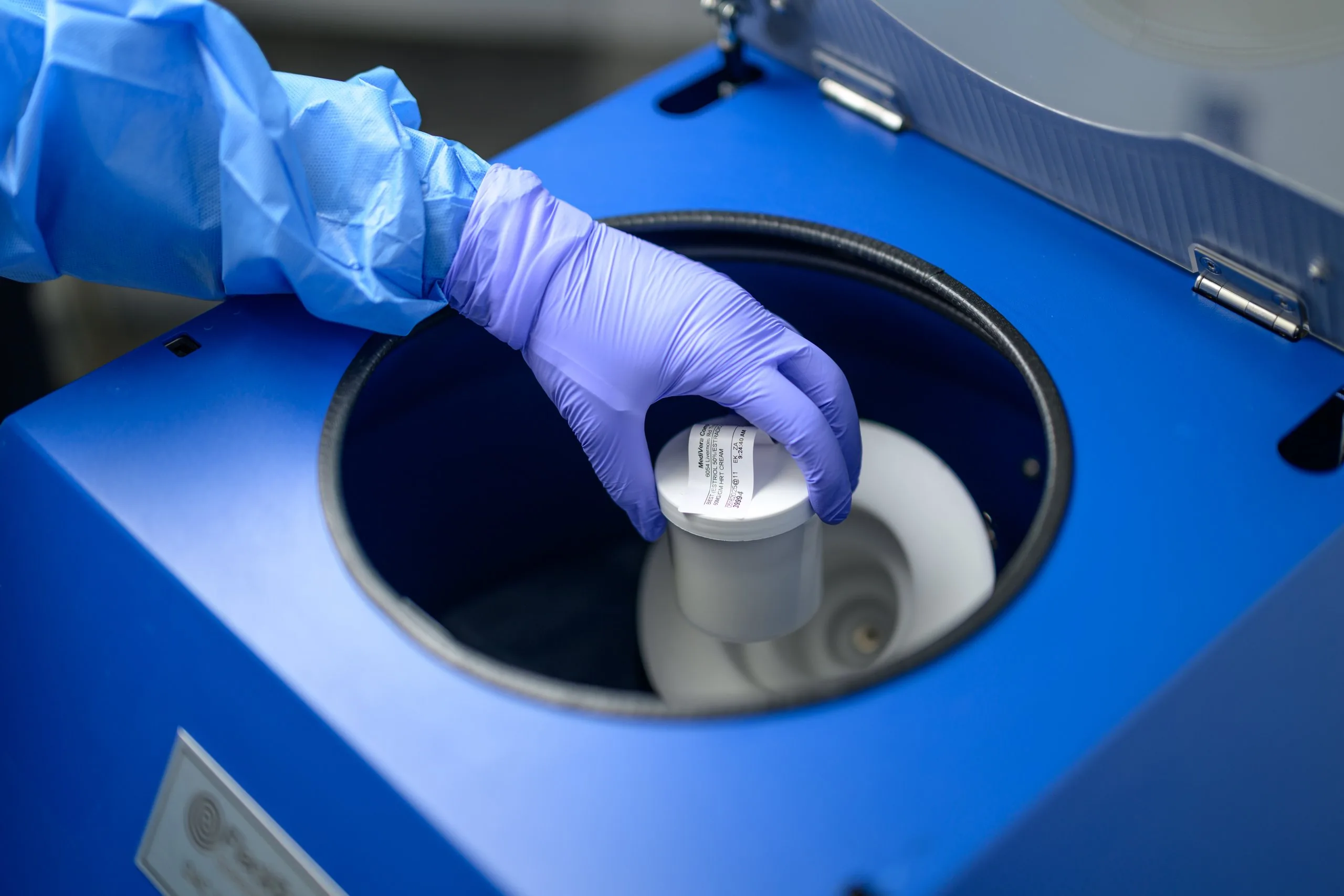
A compounded preparation follows the same chemistry from a different starting point. A 503A pharmacy begins with a United States Pharmacopeia grade active ingredient and dissolves it into the ordered oil at the ordered strength. The solution is then filtered and filled under sterile conditions, in accordance with USP 795, 797, and 800.
What differs from a manufactured product is batch size, and the fact that the formula is written for one patient rather than for a market.
None of that happens outside a licensed facility, and none of it happens without a prescription. Testosterone is a Schedule III controlled substance under the Controlled Substances Act, which puts DEA registration and recordkeeping on top of the USP requirements a pharmacy already carries.
Compounded medications are not reviewed by the FDA for safety or effectiveness. That is a category fact, not a quality judgment, and it applies to every compounded medication regardless of who prepares it. MediVera documents its own process through dual PCAB accreditation in sterile and non-sterile compounding and through independent third-party testing, with more than $1.5M invested in that testing annually. Details sit on our quality and compliance page.
Why the Ester Sets the Injection Interval
The depot sits in tissue after injection and enzymes go to work cleaving the ester off. Only the freed testosterone does anything. How fast that cleavage runs depends on the length of the fatty acid chain, and that is the whole reason interval follows ester rather than dose.
Propionate has the shortest chain of the three. Levels climb fast and drop fast. Published pharmacokinetic work puts the terminal half-life at roughly 19 hours and suggests injecting every two to three days to hold a therapeutic response, which is a demanding schedule for anyone who dislikes needles.
Cypionate sits at the other end. Its longer chain releases over a wider window, and FDA labeling gives 50 to 200 mg every two to four weeks. In practice a lot of prescribers write shorter intervals than that to flatten the peak and trough swing, which is worth knowing before anyone reads the label range as the expected schedule.
A shorter ester buys responsive titration at the cost of more injections. A longer ester buys fewer injections at the cost of a slow correction when the dose turns out to be wrong. Neither pattern wins in the abstract. Which one suits a patient comes down to their response, their schedule, and how they feel about needles, and that call belongs to the prescriber.
How Each Ester Is Administered
The labeled routes are not the same across the three.
- Testosterone cypionate is labeled for intramuscular use only. FDA labeling states it is not for intravenous use and directs that intramuscular injections be given deep in the gluteal muscle.
- Testosterone enanthate is labeled for intramuscular injection. A separate enanthate autoinjector product is approved for subcutaneous use, which is a different product rather than a different route for the same one.
- Testosterone propionate has no current US commercial product, so route and interval come from the prescriber and the published literature rather than from a label.
Before any of it, FDA labeling for testosterone cypionate directs that the diagnosis of hypogonadism be confirmed first. Serum testosterone should be measured in the morning on at least two separate days, and both readings should fall below the normal range.
Subcutaneous administration of testosterone is a common question from patients who have read about it. Whether a given preparation is appropriate for that route, and at what dose, is a prescriber determination that depends on the specific formulation in hand.
How to Store Testosterone Cypionate
Testosterone cypionate does not go in the refrigerator. FDA labeling for injectable testosterone esters specifies 20 to 25 degrees Celsius, which is 68 to 77 degrees Fahrenheit, described as USP Controlled Room Temperature.
Patients who refrigerate it anyway tend to call about the crystals. Those are a solubility effect, not spoilage. The labeling covers it directly, saying that warming the vial and rotating it between the palms will redissolve any crystals formed during storage at low temperature.
Beyond-use dating is where compounded and manufactured products part company. A manufactured vial carries an expiration date from the manufacturer. A compounded preparation carries a beyond-use date the pharmacy assigns under USP standards, and it is always shorter. For our compounded testosterone cypionate and propionate formulation that lands around six weeks from receipt, with the vial used within 28 days of the first puncture.
That shorter window catches people out, and I understand why. USP sets a beyond-use date from the preparation method and the sterility testing applied to that batch, which is a different calculation from a manufacturer’s expiration dating.
The prescription label on the vial in hand is the governing document. It carries the beyond-use date and storage terms for that specific preparation, and it supersedes any general guidance published anywhere, including this page.
Why a Cypionate and Propionate Combination Gets Compounded
Pairing a short ester with a long one is an attempt to work the interval problem from both ends. The short ester covers the early window, before the long ester has reached steady release. The long one then carries the stretch between doses.
MediVera compounds a testosterone cypionate and testosterone propionate solution at 160 mg and 40 mg per milliliter in grapeseed oil, supplied in a 10 mL vial. Grapeseed oil is the vehicle rather than the cottonseed oil used in the commercial cypionate product, which matters for patients with a cottonseed sensitivity.
Dosing for a compounded formulation is individualized, because no approved indication or labeled dosing schedule exists for it. Regimens documented for testosterone generally include 50 to 200 mg intramuscularly every two to four weeks.
A subcutaneous regimen described in the literature runs as follows.
- Starting dose. 75 mg weekly, injected in the abdominal region.
- First review. Re-evaluate after six weeks of dosing.
- Reduce. Decrease by 25 mg if the total testosterone trough concentration reaches 650 ng/dL or higher.
- Increase. Add 25 mg if the trough falls below 350 ng/dL.
What these figures are and are not
Those figures describe testosterone regimens reported in the literature. They are not an approved dosing schedule for any compounded preparation, and no compounded formulation carries an FDA-approved indication. The prescriber sets the dose and the interval for the individual patient.
A combination is one option among several. A single long ester, a single short ester, or a non-injectable route may suit a given patient, and the prescriber makes that determination. Our guide to compounded testosterone replacement therapy covers the wider set of formulations, and the testosterone enanthate monograph goes deeper on that ester specifically.
Side Effects and What Providers Monitor
Injection site reactions are the most commonly reported effects across testosterone esters. Reported reactions include pain, bruising, redness, or skin irritation where the needle went in.
Systemic effects reported with androgen therapy include the following.
- Acne
- Increased facial or body hair growth
- Breast enlargement
- Mood changes
- Increased blood pressure
- Changes in libido in either direction
- Elevated red blood cell counts
Many of these track with dose. A patient reporting them gives the prescriber a reason to reassess the regimen.
FDA labeling directs periodic monitoring of hemoglobin and hematocrit in patients receiving high doses of androgens, because increases in red cell mass can require stopping treatment. Labeling also directs that if an adverse reaction leads to stopping the androgen, any restart should use a lower dosage.
Testosterone is metabolized largely in the liver. Roughly 90 percent of a dose leaves in the urine, and about six percent in the feces.
Insurance and Cost
Coverage is frequently declined. Compounded preparations sit outside the approval pathway most plans build their formularies around, so patients often pay out of pocket.
Health savings and flexible spending accounts are usually usable for these prescriptions. Beyond that, one call to the plan before filling settles it faster than anything else, because coverage varies by plan and not by pharmacy.
Questions Providers and Patients Ask
How is testosterone cypionate made?
Testosterone is esterified with cyclopentylpropionic acid, which makes the molecule oil soluble. The ester is then dissolved into a carrier oil at the ordered strength, filtered, and filled under sterile conditions. Commercial product uses cottonseed oil with benzyl benzoate and benzyl alcohol. A compounded preparation starts from a USP grade active ingredient and follows USP 795, 797, and 800.
What oil is in testosterone cypionate?
Cottonseed oil in the commercial product, at 736 mg per milliliter in the 100 mg/mL strength and 560 mg per milliliter in the 200 mg/mL strength. Compounded preparations may use a different vehicle. The MediVera testosterone cypionate and propionate formulation uses grapeseed oil.
Does testosterone cypionate need to be refrigerated?
No. FDA labeling specifies storage at 20 to 25 degrees Celsius, or 68 to 77 degrees Fahrenheit, at USP Controlled Room Temperature. If a vial has been cold and crystals have formed, labeling states that warming the vial and rotating it between the palms will redissolve them.
How long can testosterone cypionate be stored?
A manufactured vial carries the manufacturer expiration date. A compounded preparation carries a beyond-use date assigned by the pharmacy, which is shorter. The MediVera compounded testosterone cypionate and propionate formulation carries a beyond-use date of approximately six weeks from receipt and should be used within 28 days after the first puncture. The label on the vial governs.
What is the difference between testosterone cypionate and testosterone enanthate?
Different fatty acid chains, different carrier oils, and different excipients. Cypionate is supplied in cottonseed oil with benzyl benzoate and benzyl alcohol. Enanthate is supplied in sesame oil with chlorobutanol. The sesame content is the practical difference for a patient with a sesame sensitivity. FDA labeling does not publish an ester half-life for either one.
Can testosterone cypionate and propionate be mixed?
A pharmacy can compound the two esters together in a single solution when a prescriber orders it, which is what a cypionate and propionate formulation is. Combining products from separate vials at the point of administration is a different question and belongs to the prescriber.
Can testosterone propionate be injected subcutaneously?
There is no current US commercial propionate product and therefore no FDA label to answer this. Route for a compounded preparation is set by the prescriber against the specific formulation being dispensed.
Is testosterone cypionate FDA approved?
Commercially manufactured testosterone cypionate injection is an FDA-approved product. A compounded testosterone preparation is not, because compounded medications are not reviewed by the FDA for safety or effectiveness. They are prepared on prescription for an individual patient when an approved product is unavailable or unsuitable for that patient.
Which ester should a patient be on?
That is a prescriber determination, not a ranking. The esters differ in injection interval, carrier oil, and available strengths, and FDA labeling states directly that cypionate and propionate should not be used interchangeably because their durations of action differ. The right choice follows the individual patient response, sensitivities, and dosing schedule.
Working With MediVera
MediVera is a 503A compounding pharmacy licensed in 49 states, with dual PCAB accreditation in sterile and non-sterile compounding and more than $1.5M a year invested in independent third-party testing.
For prescribers
Providers evaluating a compounded testosterone formulation can review our hormone replacement therapy compounding services, request third-party testing documentation for a specific batch, and reach our pharmacists directly with formulation questions through the provider resources page. Our pharmacists can also discuss transitions for patients moving from another pharmacy.
Sources
- Testosterone cypionate injection, solution, prescribing information. Via DailyMed, US National Library of Medicine.
- Testosterone enanthate injection, USP, prescribing information. Hikma Pharmaceuticals USA, via DailyMed.
- Testosterone enanthate autoinjector, prescribing information. Antares Pharma, via DailyMed.
- Subcutaneous testosterone propionate pharmacokinetics. Translational Andrology and Urology, via PubMed Central, PMC7480784.
- Testosterone cypionate compound summary, CID 441404. PubChem, National Center for Biotechnology Information.
- Compounding and the FDA, questions and answers. U.S. Food and Drug Administration.
This article is for informational purposes only and is not medical advice. Always consult a healthcare professional before starting any treatment. Compounded medications referenced are not reviewed by the FDA for safety or effectiveness and are prepared by prescription for individual patients. Providers are solely responsible for determining their appropriateness.
MV
Chris Kinaya, PharmD
Chris Kinaya is a licensed pharmacist with six years of experience and a strong commitment to patient care. Since joining MediVera Compounding Pharmacy in 2024, he has contributed to the pharmacy’s daily operations with a focus on precision, service, and quality. Chris earned his PharmD from Ferris State University and is licensed in five states. He is passionate about supporting providers and patients through customized medication solutions tailored to individual needs.