Hormone replacement therapy (HRT) may be considered by healthcare providers to help manage symptoms associated with hormonal changes due to aging or other factors. Common scenarios include the management of menopause-related symptoms, low testosterone, or other hormone-related conditions, based on a provider’s clinical judgment.
When exploring HRT options, patients and their providers often compare two broad categories of hormone therapy: bioidentical hormone replacement therapy (bHRT) and synthetic hormone therapy. These categories differ in their chemical structure, source, and formulation approach.
Understanding the distinctions between bioidentical and synthetic hormones can support more informed discussions with your healthcare provider. The guide below outlines key differences that may be considered as part of an individualized treatment plan.
What Is Bioidentical Hormone Replacement Therapy (bHRT)?
Bioidentical hormone replacement therapy (bHRT) refers to the use of hormones that are structurally identical to those produced naturally by the human body. These hormones are synthesized to match the molecular structure of endogenous hormones and may be considered by healthcare providers when individualized hormone support is appropriate.
bHRT is sometimes prescribed as part of a broader treatment approach to address hormone-related changes associated with aging or other conditions. Because bHRT formulations can be customized in terms of dosage and delivery method, providers may consider them when commercial hormone therapies are not suitable for a patient’s specific needs.
The Role of Bioidentical Hormones in Health and Wellness
Bioidentical hormones are sometimes included in treatment plans to help address hormone-related changes that occur with age or other health factors. Because these hormones are structurally identical to those produced naturally by the human body, some providers and patients consider them for individualized hormone support when commercially available options are not suitable.
Here are two aspects often discussed in relation to bioidentical hormones:
-
Biological Compatibility: Bioidentical hormones match the molecular structure of hormones produced by the endocrine system. This structural similarity is thought to help the body recognize and metabolize these compounds in a way that closely mirrors its natural processes. Providers may consider this compatibility when tailoring a treatment approach for patients experiencing hormone-related symptoms.
-
Customized Formulations: Because hormone needs can vary significantly from person to person, bioidentical hormone therapy is often compounded to match an individual’s specific prescription requirements. This customization may include different dosages or delivery forms (such as capsules, creams, or troches), as determined by the prescribing provider.
Understanding Bioidentical and Synthetic Hormones
When exploring hormone replacement therapy (HRT), patients and healthcare providers may consider two broad categories of hormones: bioidentical and synthetic. Both types are used in managing hormone-related conditions, but they differ in their chemical structure, source, and how they are formulated. These differences may influence the way the body responds to treatment, depending on the individual.
Bioidentical Hormones
Bioidentical hormones are chemically synthesized to be structurally identical to hormones naturally produced by the human body. Because of this similarity, some healthcare providers choose bioidentical hormone therapy (bHRT) as part of a personalized approach to hormone support, particularly when standard commercial products are not suitable.
Some individuals report that bHRT feels more closely aligned with their natural rhythms or is better tolerated, though experiences vary. These therapies are often compounded in specific doses and delivery forms, based on a licensed prescriber’s instructions and tailored to the patient’s individual hormone needs.
At MediVera Compounding Pharmacy, we prepare customized bHRT formulations based on provider-directed prescriptions. These formulations may be considered for individuals navigating hormone-related changes such as menopause or low testosterone, when personalized hormone support is appropriate.
Synthetic Hormones
Synthetic hormones are manufactured to mimic the effects of the body’s natural hormones, but their chemical structures are not identical to endogenous hormones. These products are typically available as FDA-approved medications in standardized forms such as tablets, patches, or injections.
Some synthetic hormone therapies, including certain estrogens and progestins, have been studied extensively and are commonly used in conventional HRT. Like all medications, they may carry benefits and risks, and decisions about their use should be made in consultation with a licensed healthcare provider.
The Key Differences Between Them
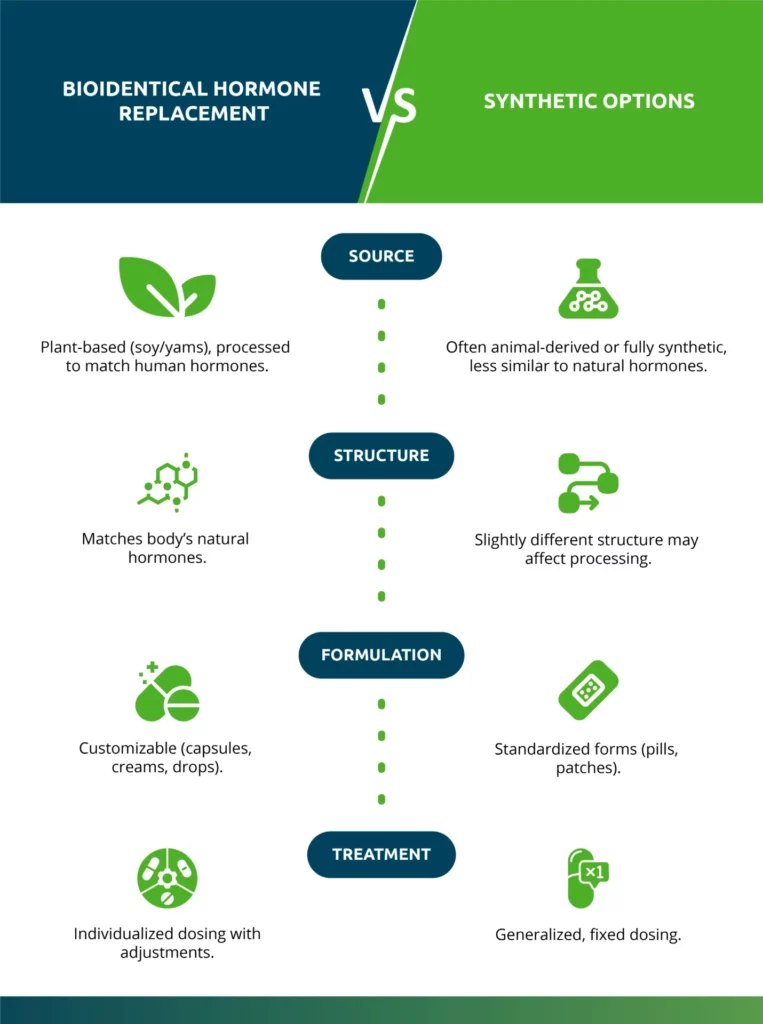
While both bioidentical and synthetic hormones may be used in hormone replacement therapy (HRT), they differ in terms of source, chemical structure, and how they are formulated. These distinctions may influence how a provider selects an appropriate treatment approach based on individual needs.
Source of Hormones
Bioidentical hormones are typically synthesized from plant-derived compounds, most commonly sourced from soy or yams. These compounds are chemically processed in a laboratory to create hormones that are structurally identical to those naturally produced by the human body. This plant-derived origin is one reason bioidentical hormones may be selected for individualized therapy when commercially available options are not suitable.
Synthetic hormones, by contrast, may be derived from animal sources or produced through fully synthetic chemical processes. For example, some forms of synthetic estrogen used in commercial HRT are derived from the urine of pregnant mares. The origin and processing of these hormones can result in molecular structures that differ slightly from those of endogenous human hormones.
Chemical Structure
A key distinction between bioidentical and synthetic hormones lies in their chemical structure. Bioidentical hormones are formulated to be structurally identical to those produced by the human endocrine system. Because of this, they may be more easily matched to an individual’s prescribed hormone profile, particularly in compounded formulations.
Synthetic hormones, on the other hand, may have structural differences from naturally occurring hormones. These differences can influence how the body processes or responds to the therapy, though experiences may vary widely between individuals. The choice between these hormone types is typically based on clinical factors and discussed between the patient and their healthcare provider.
Formulation
One of the primary distinctions between bioidentical and synthetic hormones lies in how they are formulated. Bioidentical hormones are often compounded by a licensed pharmacy based on a provider’s prescription. This allows for customization of both dosage and delivery form. At MediVera Compounding Pharmacy, bioidentical hormone preparations may be compounded into capsules, creams, drops, troches, or suppositories, depending on what the provider determines is most appropriate for the patient’s needs.
In contrast, synthetic hormones are generally manufactured in standardized strengths and forms, such as tablets, patches, or injections. These commercially available medications are pre-dosed and not typically modified for individual hormone levels or absorption preferences.
Treatment Approach
The treatment approach may also differ between synthetic hormone therapy and compounded bioidentical hormone therapy. In some cases, providers may recommend compounded bHRT when individualized dosing, formulation, or delivery method is needed and not available in a commercial product. This approach allows prescribers to tailor hormone therapies based on laboratory values, patient-reported symptoms, and clinical history. Adjustments are typically made over time under medical supervision.
Synthetic hormone therapy, by comparison, usually follows a generalized treatment model, using fixed dosages and commercially available formulations. While this approach may work well for many individuals, it may not be suitable for patients whose needs fall outside standard dosage ranges or who require alternative delivery methods.
Choosing the Right Hormone Replacement Therapy
Hormones help regulate many essential bodily functions, and even small changes in hormone levels may influence energy, mood, sleep, and overall well-being. As individuals and their providers evaluate hormone replacement therapy (HRT) options, the choice between bioidentical and synthetic hormones is shaped by several factors, including individual health goals, symptom presentation, and how a patient responds to treatment.
Here are some key considerations that may guide this decision:
Personalized Approach to Hormonal Needs
Compounded bioidentical hormones may offer flexibility in formulation and dosing, which allows prescribers to tailor therapy to each individual’s hormonal profile. At MediVera Compounding Pharmacy, these formulations are prepared based on provider-directed prescriptions and may be customized in terms of dosage form and strength to align with clinical guidance and patient needs.
Tolerance and Monitoring
Because bioidentical hormones are structurally identical to those produced by the human body, some patients and providers report that these therapies may be better tolerated in certain cases. Experiences vary, and all hormone therapies—whether synthetic or bioidentical—can carry risks and benefits depending on the individual. Ongoing monitoring by a healthcare provider is essential to help ensure that any treatment remains appropriate over time.
Focus on Long-Term Wellness
Hormone replacement therapy is sometimes considered not only to help address symptoms but also as part of a broader wellness plan. Hormones influence many physiological systems, including those related to bone health, metabolism, and cognition. Some individuals and providers view bioidentical hormone therapy as a way to support overall balance when personalized care is indicated.
At MediVera Compounding Pharmacy, we work with licensed providers to prepare individualized hormone therapies in accordance with clinical need.
Personalized bHRT Solutions at MediVera Compounding Pharmacy
At MediVera Compounding Pharmacy, we understand that hormone needs vary from person to person. We work with licensed healthcare providers to prepare compounded bioidentical hormone therapies (bHRT) tailored to individual prescriptions. These formulations are available in a variety of delivery forms to help accommodate patient preferences and lifestyle considerations, when such customization is clinically appropriate.
Below are some of the delivery options that providers may prescribe when working with MediVera:
-
Cream: A topical option that may be applied to specific areas of the skin. Creams are often selected for patients who prefer transdermal application, based on provider guidance.
-
Oral Capsule: A familiar option for many patients, oral capsules can be compounded to match the dosing needs outlined by the prescribing provider.
-
Solution: Liquid hormone solutions offer flexibility in dosing and may be taken on their own or with liquids, depending on the provider’s instructions.
-
Lozenge (Troche): Troches dissolve in the mouth and may be used when buccal or sublingual administration is appropriate. This form is sometimes selected for individuals who prefer to avoid swallowing pills.
Take the First Step Toward Individualized Hormone Care
Hormonal changes are a natural part of life, and for some individuals, working with a healthcare provider to evaluate hormone replacement therapy (HRT) options may be part of maintaining overall well-being. Bioidentical hormone replacement therapy (bHRT), when prescribed, offers the flexibility to align treatment with each person’s unique health profile and lifestyle needs.
At MediVera Compounding Pharmacy, we collaborate with licensed healthcare providers to prepare individualized bHRT formulations based on provider-directed prescriptions. Whether prescribed as a cream, capsule, solution, or lozenge, each formulation is compounded to meet specific instructions regarding dosage and delivery method.
Note: Compounded bioidentical hormone therapies are not reviewed by the FDA for safety or effectiveness. Treatment decisions should always be made in consultation with a licensed healthcare provider.